
The situation in the Middle East has become more volatile in recent hours, after weeks of attempts to negotiate a settlement to the conflict.
Now, there is once again the possibility of a new war breaking out in the region, with Iran carrying out preliminary attacks targeting US ships and one of the most important oil fields in the United Arab Emirates.
The escalation came after Trump said that the US military was carrying out an operation in the Strait of Hormuz, an operation to allow commercial ships to pass through it, so Iran issued a warning that any ship trying to pass through Hormuz without permission would be attacked with force. The first attempt was made by a UAE ship, which was immediately attacked by Iran.
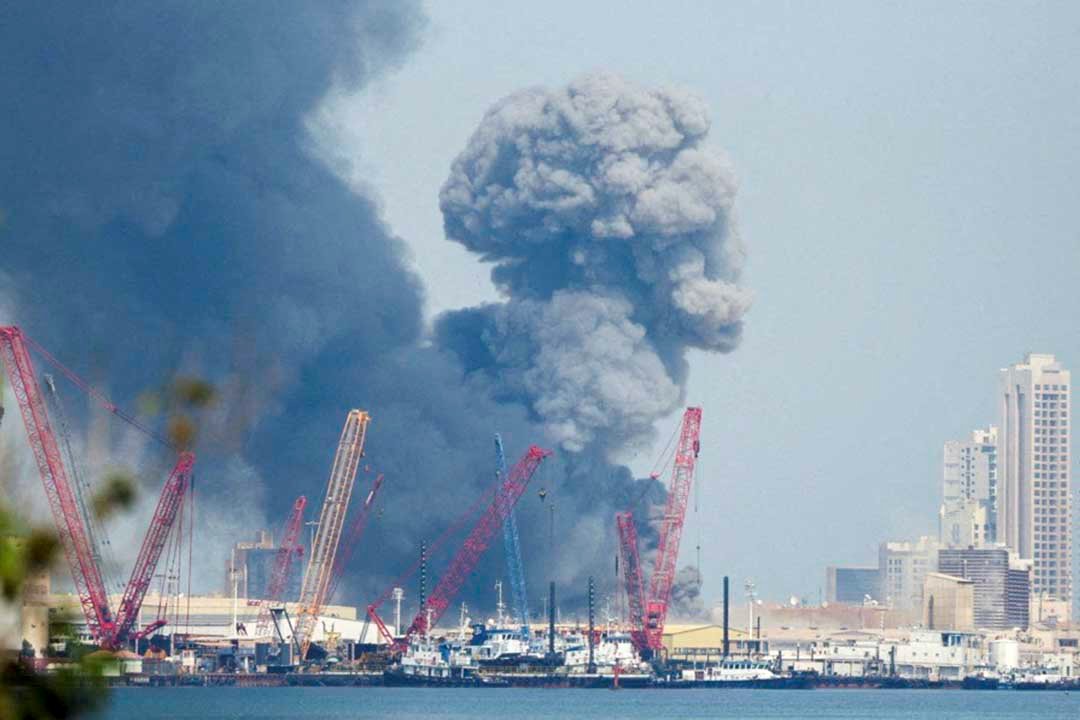
Iran, however, did not stop there, and this evening it launched missiles and drones at targets in the UAE, including the oil industry in Fujairah, with these attacks being taken as a message from Iran that any violation of the ceasefire will have consequences for targeting energy facilities in the region, if Iran is attacked, a move that is intended to put pressure on the ability of regional countries to export oil and gas.
Following the Iranian attacks in the UAE, a press release was issued by the UAE Foreign Ministry stating that it would respond.
It is also possible that this attack is an attempt by the UAE to push for a joint response from the Gulf countries after these events.
However, in my opinion, the Gulf countries in general will be reluctant to get directly involved in the war, as they understand that this conflict is not theirs, and they have already paid a heavy economic price.
In another incident, as reported by Al Jazeera, a senior Iranian official told the parliament that Iran is the guardian of this strategic waterway in the region.
Interestingly, just hours ago, Iranian Foreign Minister Abbas Araghchi held a meeting with parliament and said, according to local media, that “a method is being prepared to manage the Strait of Hormuz.”
He added; “The waterway will not return to its former state, and enemy ships will not be allowed to pass through it.”
Finally, the current US attempt to protect and guide ships leaving the Strait of Hormuz is very similar to the strategy the US used during the Gulf War, except that insurance companies will not allow ships to pass without protection, and the US action is similar to what it did between 1981 and 1988, when it protected oil tankers in Kuwait.
Although the United States said there would be no naval patrols, Iran recently claimed to have attacked US warships that had evaded radar monitoring and approached the Strait of Hormuz.


